
Why Does My Cat Eat Plastic? (And Why Some Cats Become Obsessed With It)
Why is your cat obsessed with eating plastic? Learn the real reasons cats chew plastic, when it becomes dangerous, and how to stop the behavior safely.
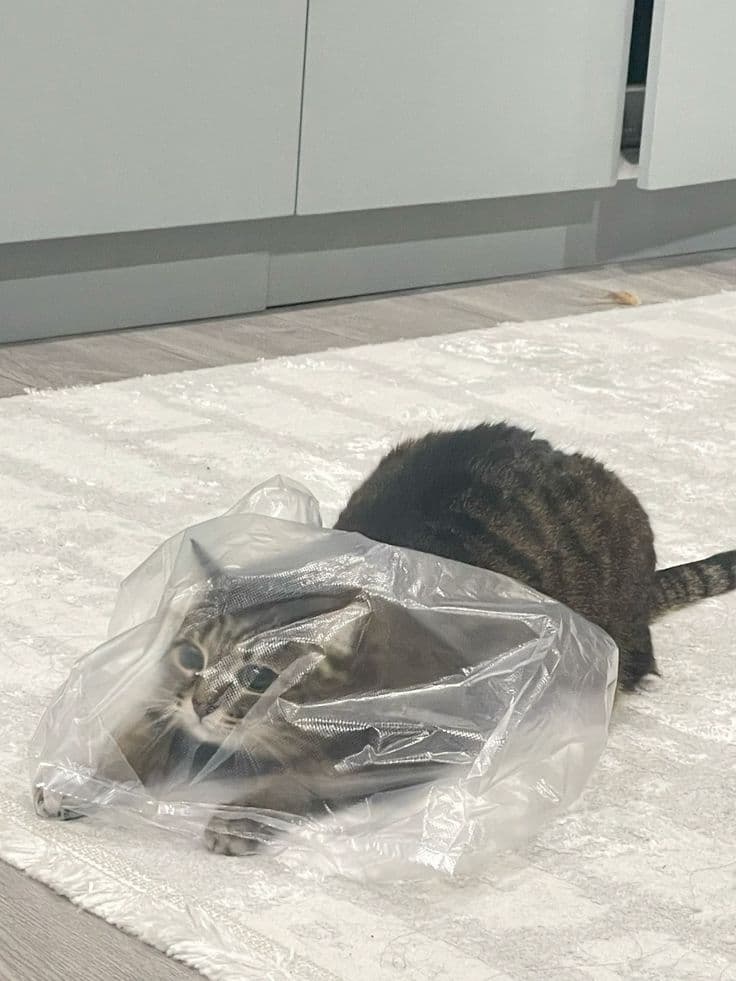
Why Does My Cat Eat Plastic? (And Why Some Cats Become Obsessed With It)
One day your cat ignores the expensive toy you bought specifically for them.
The next day they’re aggressively chewing on a random piece of plastic packaging like it’s gourmet cuisine.
If your cat is obsessed with licking or eating plastic, you’re definitely not alone.
In many cases, cats chewing plastic is relatively harmless and comes down to texture, smell, or boredom.
But if it becomes obsessive or frequent, it can sometimes point to stress, compulsive behaviors, or underlying health issues.
Cats Like The Texture & Sound
Some cats simply enjoy the texture, crinkling sound, or chewing sensation of plastic.
Honestly, cats are weird little sensory addicts sometimes.
The crunchy noise, resistance, and movement can make plastic weirdly stimulating, especially for younger indoor cats that don’t get a lot of environmental enrichment.
Which also explains why some cats become weirdly obsessed with bubble wrap, shower curtains, ziplock bags, charging cables, or basically any object they’re absolutely not supposed to chew.
Stress & Anxiety
Plastic chewing can also become a stress-related behavior.
Cats sometimes develop repetitive comforting habits when they’re anxious, overstimulated, or dealing with environmental stress.
Changes like moving homes, new pets, loud environments, separation anxiety, or sudden routine changes can sometimes trigger repetitive chewing behaviors in stressed cats.
And unfortunately, some cats are masters at pretending everything is fine while quietly spiraling next to a houseplant.
If your cat also shows signs like hiding, overgrooming, aggression, or sudden behavior changes, stress may be playing a role.
Boredom
Yes, yes, exactly like you cat can become bored (but I’d hope you don’t chew plastic when you are … right ? )
A bored cat will eventually create its own entertainment.
And unfortunately, that entertainment is often destruction.
Indoor cats especially need stimulation:
climbing, scratching, hunting-style play, interactive toys, and environmental enrichment.
Without enough stimulation, some cats start turning random household objects into hobbies.
Including plastic.
Which is why many owners notice the behavior gets worse:
- late at night
- when the cat is alone
- or when they haven’t played enough during the day.
Pica & Nutritional Deficiencies
In some cases, chewing or eating non-food objects can be linked to a condition called pica.
Pica is a compulsive behavior where cats repeatedly chew or consume things that aren’t actually food.
This can sometimes be associated with nutritional deficiencies, digestive issues, anemia, compulsive behaviors, or other underlying medical conditions.
Not every plastic-chewing cat has pica, but if your cat is actually swallowing plastic regularly, it’s definitely worth discussing with a veterinarian.
When Should You Worry?
Occasional licking or chewing is usually not an emergency.
But if your cat regularly swallows plastic, vomits after chewing it, suddenly stops eating, becomes lethargic, coughs, chokes, or starts obsessively eating non-food objects, it’s worth taking seriously.
Swallowed plastic can potentially cause dangerous intestinal blockages, which can become life-threatening without treatment.
How To Stop Your Cat From Eating Plastic
The best approach is usually a combination of management and enrichment.
Keeping plastic bags and wrappers out of reach obviously helps, but increasing playtime, adding more stimulation, rotating toys more often, reducing stress, and offering safer chewing alternatives can also make a surprisingly big difference.
And honestly, sometimes simply hiding the plastic works better than trying to negotiate with the tiny chaos goblin living in your house.
Final Thoughts
Most cats chewing plastic are not secretly trying to self-destruct.
A lot of the time, they simply like the smell, texture, sound, or stimulation.
But if the behavior becomes obsessive, frequent, or involves actually swallowing plastic, it’s worth paying attention to because stress, digestive issues, boredom, and medical problems can sometimes play a role.
And honestly, once you start paying attention to weird pet behaviors and potential hazards, you realize how many everyday products can quietly become problems for cats.
After spending way too much time researching questionable cat food ingredients and common pet hazards, I eventually ended up building an app to scan and analyze products more easily for cat owners.
At first it mostly focused on cat food ingredients and controversial additives like carrageenan, but I eventually started adding plant scans and other pet hazards too.
You can use the app to scan:
- cat food ingredients
- toxic plants
- household products
- and other common pet hazards