
Can Cats Eat Yogurt? Is It Safe or Bad for Cats?
Can cats eat yogurt? While plain yogurt is generally safe in small amounts, many cats are lactose intolerant. Learn the benefits, risks, and which yogurts to avoid before sharing a spoonful.
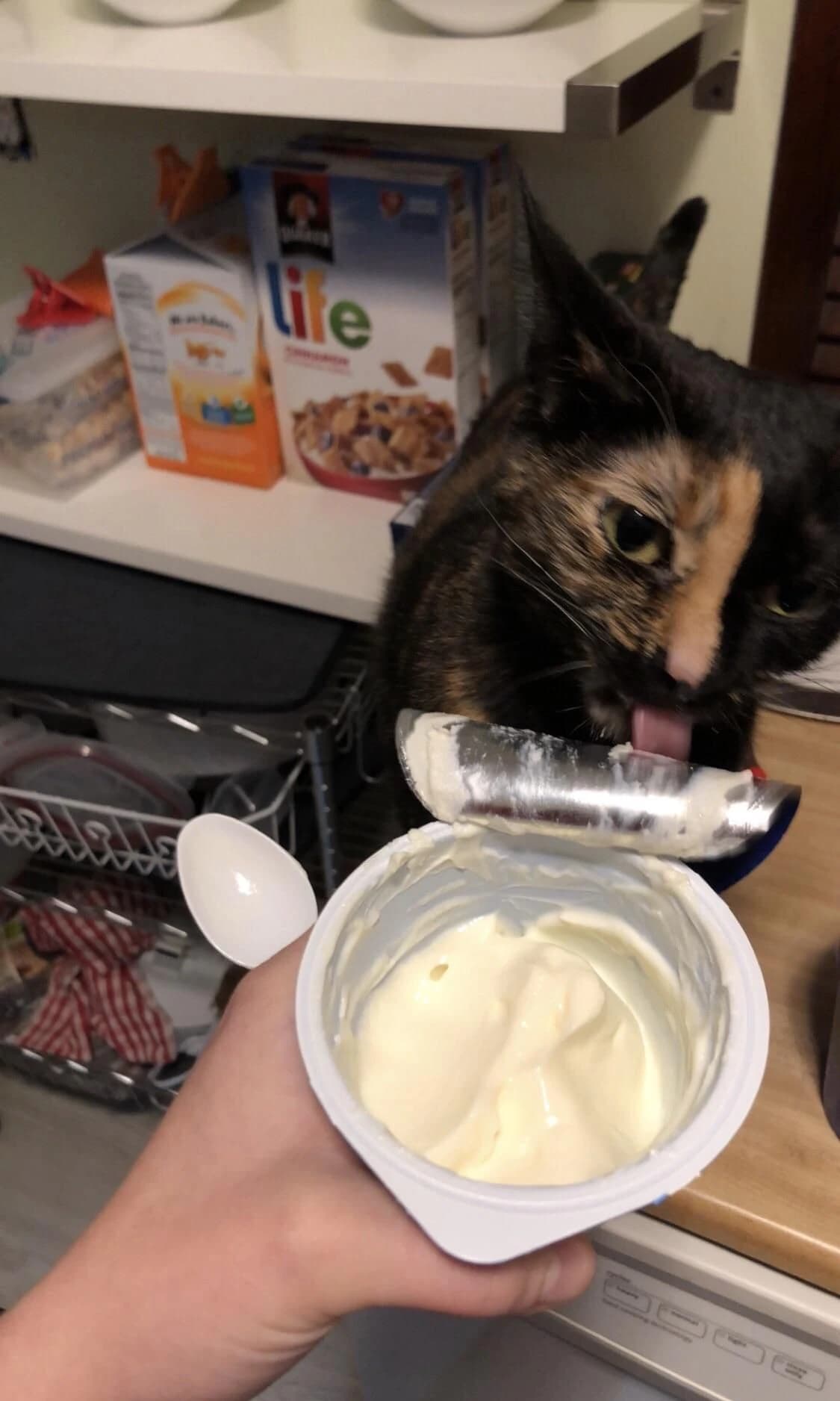
Can Cats Eat Yogurt? Is It Safe or Bad for Cats?
If you've ever opened a yogurt cup around your cat, you've probably noticed how quickly they become interested.
A few sniff the spoon. Some try to steal a lick.
Others won't leave you alone until you've finished eating.
So... is yogurt actually safe for cats?
The short answer is yes, but only certain types, and only in small amounts. While plain yogurt isn't toxic to cats, it isn't something they actually need either. Here's what every cat owner should know before sharing a spoonful.
Can Cats Eat Yogurt?
Yes, cats can eat a small amount of plain, unsweetened yogurt.
Unlike foods such as onions or garlic, yogurt isn't toxic to cats. However, that doesn't automatically make it a healthy everyday treat.
Most veterinarians recommend thinking of yogurt as an occasional snack rather than a regular part of your cat's diet.
If you do decide to offer some, keep the portion small and choose plain yogurt without added sugar, artificial sweeteners or flavorings.
Why Can Some Cats Eat Yogurt But Not Milk?
This is where many cat owners get confused.
You've probably heard that adult cats shouldn't drink milk because they're lactose intolerant.
So why is yogurt often considered safer?
The answer is fermentation.
During the yogurt-making process, beneficial bacteria break down part of the lactose naturally found in milk. That means plain yogurt usually contains less lactose than regular milk, making it easier for some cats to digest.
That said, "less lactose" doesn't mean "lactose-free."
Many adult cats can still develop digestive upset after eating yogurt, especially if they already have a sensitive stomach.
If you'd like to learn more about why dairy affects cats differently, check out our guide on Can Cats Drink Milk?
Is Yogurt Good for Cats?
Yogurt does contain some beneficial nutrients, including:
Protein
Calcium
Probiotics
Vitamin B12
Potassium
The probiotics found in yogurt are often the biggest reason people consider giving it to their pets.
However, there's one important thing to remember.
A complete, balanced cat food already provides the nutrients healthy cats need every day.
So while yogurt may contain beneficial ingredients, it doesn't offer any essential health benefits that your cat can't already get from a high-quality diet.
Is Yogurt Bad for Cats?
Not necessarily, but it can cause problems for some cats.
Even though yogurt contains less lactose than milk, many adult cats still struggle to digest dairy products.
Possible side effects include:
Diarrhea
Vomiting
Gas
Stomach discomfort
These symptoms are usually mild, but they're a good sign that yogurt simply isn't a good treat for your cat.
Can Cats Eat Greek Yogurt?
Plain Greek yogurt is generally considered one of the better options if you want to offer yogurt.
Because it's strained during production, it usually contains even less lactose than regular yogurt while remaining high in protein.
Just make sure it's:
Plain
Unsweetened
Free from artificial sweeteners
Free from added fruit, chocolate or other toppings
As always, moderation is key.
What Types of Yogurt Should Cats Avoid?
Not all yogurts are created equal.
Many products made for humans contain ingredients that aren't suitable for cats.
Avoid yogurts containing:
Xylitol (extremely dangerous for pets)
Chocolate
Raisins
Artificial sweeteners
Large amounts of added sugar
Candy pieces or cookies
Flavored syrups
When in doubt, it's safer not to share flavored yogurt at all.
How Much Yogurt Can Cats Eat?
If your cat tolerates yogurt well, only offer a very small amount.
A teaspoon is more than enough for most cats.
Yogurt should never replace a complete cat food or become a daily snack.
Think of it as an occasional treat rather than a nutritional supplement.
My Cat Ate Yogurt. Should I Worry?
In most cases, there's no reason to panic.
If your cat ate a small amount of plain yogurt, they'll likely be perfectly fine.
Keep an eye on them over the next 24 hours for signs such as:
Vomiting
Diarrhea
Loss of appetite
Excessive gas
Lethargy
If your cat ate a large amount of yogurt, or if the yogurt contained ingredients like chocolate, xylitol or raisins, contact your veterinarian immediately.
Final Verdict: Can Cats Eat Yogurt?
Yes, but only plain, unsweetened yogurt, and only as an occasional treat.
While yogurt isn't toxic to cats, many adult cats are still lactose intolerant and may experience digestive upset after eating it.
The biggest concern usually isn't the yogurt itself, it's the added ingredients found in many flavored varieties, such as artificial sweeteners, chocolate or excessive sugar.
If you're ever unsure whether a food is safe for your cat, it's always worth checking before sharing it.
Cat food scanner Leo App makes that easier by helping you understand ingredients, identify potentially harmful additives, and make more informed choices about what ends up in your cat's bowl.