
Can Cats Eat Rice?
Rice isn't toxic to cats, but that doesn't mean they need it. Here's what cat owners should know about feeding rice safely.
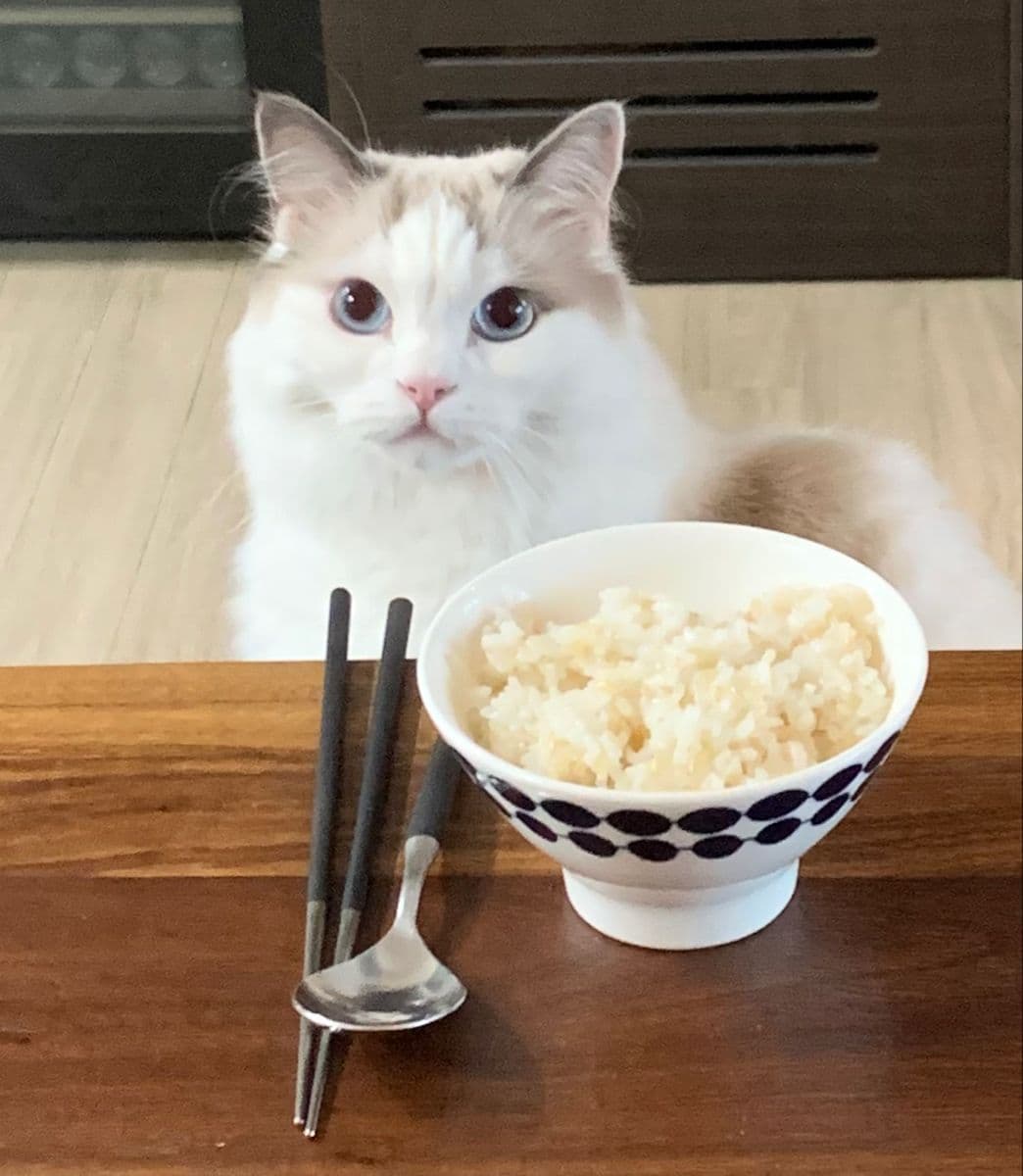
Can Cats Eat Rice?
If you've ever cooked rice at home, there's a good chance your cat showed up out of nowhere and started sniffing around your plate.
Which naturally leads to the question: Can cats eat rice?
The short answer is yes.
Plain cooked rice isn't toxic to cats and small amounts are generally safe. But just because cats can eat rice doesn't necessarily mean they should eat a lot of it.
Here's what cat owners should know.
Short Answer: Can Cats Eat Rice?
Yes, cats can eat plain cooked rice in small amounts.
A few bites of white rice or brown rice are unlikely to cause problems for a healthy adult cat.
In fact, rice is sometimes included in commercial cat foods and certain veterinary diets.
However, rice should never replace a complete and balanced cat food.
Cats are obligate carnivores, which means their bodies are designed to get most of their nutrition from animal-based proteins and fats rather than carbohydrates.
Is Rice Good For Cats?
Rice isn't harmful, but it's not exactly a superfood for cats either.
Unlike foods that naturally provide nutrients cats can use, rice is mostly a source of carbohydrates.
It contains:
Carbohydrates
Small amounts of vitamins and minerals
Very little protein compared to meat
While humans often view rice as a healthy staple food, cats have very different nutritional needs.
For most cats, rice is simply a neutral food that provides calories without offering many of the nutrients they actually require.
That's why veterinarians generally view rice as safe but not particularly necessary.
Why Cats Don't Actually Need Rice
This is where many cat owners get confused.
Because rice appears in some cat foods, people often assume cats need rice. They don't.
Cats can survive and thrive without rice in their diet.
What they truly need is:
Animal protein
Essential amino acids like taurine
Healthy fats
Vitamins and minerals
Rice can sometimes serve as an ingredient within a balanced recipe, but it should never become a major part of your cat's daily meals.
If you're interested in understanding which ingredients matter most in cat food, you may also want to read our guide on What Are Meat By-Products In Cat Food?
White Rice vs Brown Rice
Many cat owners wonder whether brown rice is healthier than white rice.
For humans, the answer is usually yes. For cats, the difference is much smaller.
White Rice
White rice is easier to digest and contains less fiber.
Because of this, it's often the type recommended when a cat is experiencing temporary digestive issues.
Brown Rice
Brown rice contains more fiber and slightly more nutrients because the outer layers remain intact.
While it may be considered more nutritious overall, some cats find it harder to digest than white rice.
For most cats, either option is generally safe when served plain and fully cooked.
Can Rice Help Cats With Upset Stomachs?
This is one of the most common questions cat owners ask.
You may have heard that rice helps settle an upset stomach.
There's some truth to that.
Because white rice is bland and easy to digest, veterinarians occasionally recommend it as part of a temporary diet for digestive issues.
However, rice alone is not a complete meal for cats.
If your cat is experiencing vomiting, diarrhea, or digestive problems, it's always best to speak with your veterinarian rather than relying solely on rice as a solution.
Interestingly, pumpkin is another food often discussed for digestive support because of its fiber content. If you're curious about that topic, check out our guide: Is Pumpkin Good For Cats?
How Much Rice Can Cats Eat?
Less than most people think.
Rice should be considered an occasional treat rather than a regular food. A few small bites mixed into a meal are usually plenty.
Large amounts of rice can:
Add unnecessary calories
Reduce the amount of protein in the diet
Fill your cat up without providing important nutrients
Remember that treats and extras should generally make up no more than a small portion of your cat's daily calories.
When Rice Can Be Bad For Cats
Rice itself isn't usually the problem. The ingredients added to rice often are.
You should avoid giving your cat rice that contains:
Garlic
Onions
Excess salt
Spicy seasonings
Heavy sauces
Butter in large amounts
These ingredients can create much bigger health concerns than the rice itself.
The same principle applies to many human foods. For example, while plain bread isn't usually toxic, flavored breads can contain dangerous ingredients. You can learn more in our guide: Can Cats Eat Bread?
Can Kittens Eat Rice?
Kittens can technically eat small amounts of cooked rice.
However, growing kittens need highly nutritious food that supports development.
Because rice provides relatively little nutritional value compared to kitten food, there's usually no reason to offer it regularly.
For kittens, it's best to focus on complete and balanced kitten diets designed specifically for growth.
Final Verdict
So, can cats eat rice?
Yes.
Plain cooked rice is generally safe for cats in small amounts and may even be used occasionally during digestive upset.
That said, rice isn't an essential part of a cat's diet and shouldn't replace high-quality animal-based nutrition.
If you're unsure whether a food is actually good for your cat, the easiest solution is to check the ingredients before feeding it.
With the cat food scanner Leo app, you can quickly scan foods, review ingredients, and identify potential red flags so you can make more informed decisions about what goes into your cat's bowl.