
Homemade Cat Food Recipe: Salmon & Sweet Potato
A simple homemade salmon and sweet potato cat food recipe, plus important safety tips and why some cat owners use salmon recipes for variety or skin and coat support.
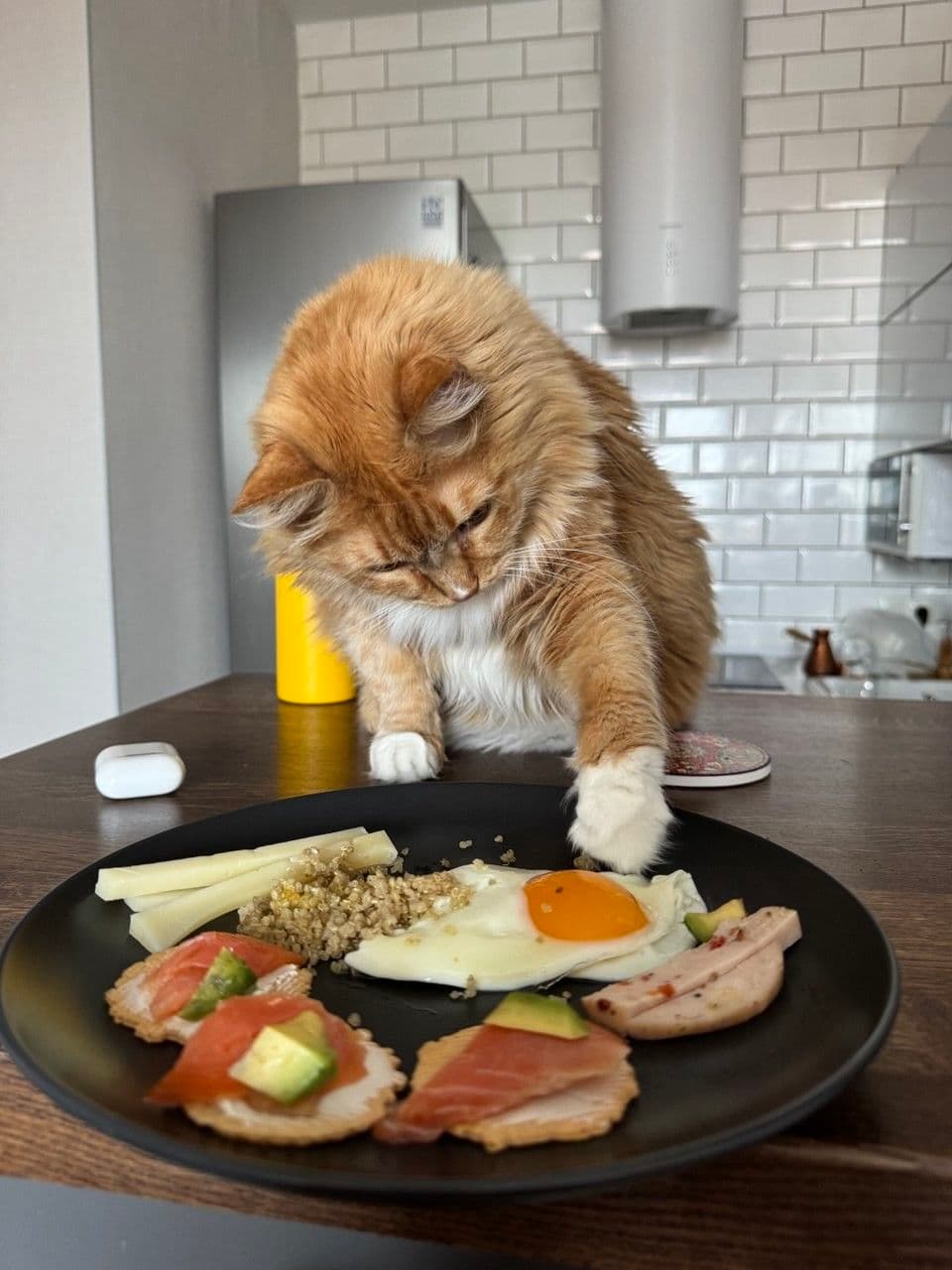
Homemade Cat Food Recipe: Salmon & Sweet Potato
Whether you’ve got a cat with food sensitivities, a ridiculously picky eater, or you’re simply tired of trying to decode commercial cat food ingredient labels like they’re government secrets, you may have started wondering if homemade cat food is worth trying instead.
And honestly, the idea sounds great at first.
You control the ingredients. You avoid some of the fillers and vague additives. And your cat gets something that actually looks like real food for once.
But homemade cat food also isn’t something to improvise blindly.
Cats have very specific nutritional needs, and creating a fully complete and balanced homemade diet takes a lot more than simply baking salmon and throwing vegetables into a bowl. Unless you’re working closely with a veterinarian or feline nutritionist long-term, homemade meals are often better used occasionally, as toppers, or as part of a broader feeding plan.
In this article, you’ll learn what to look for in a homemade cat food recipe, a few important safety tips, and why some cat owners use salmon-based recipes for variety or skin and coat support.
How To Tell If A Homemade Cat Food Recipe Is Actually Good
A homemade cat food recipe looking “healthy” doesn’t automatically mean it’s nutritionally balanced.
Some recipes online look beautiful on Pinterest while completely ignoring feline nutritional needs.
When looking at homemade cat food recipes, it’s usually a good idea to ask:
Does the recipe contain enough animal protein?
Is it intended as a full-time diet or occasional meal?
Does it avoid ingredients toxic to cats like onions or garlic?
Is it extremely restrictive or missing important nutrients?
Was it created or reviewed by someone with veterinary nutrition experience?
Simple recipes like the one below are often best used occasionally or alongside a balanced commercial diet unless professionally formulated long-term.
After spending way too much time comparing commercial cat food ingredient labels, I eventually built a small app to scan and analyze ingredients more easily.
I was mostly using it for packaged cat foods at first, but it also became a pretty useful way to visualize simple homemade recipes like this one too.
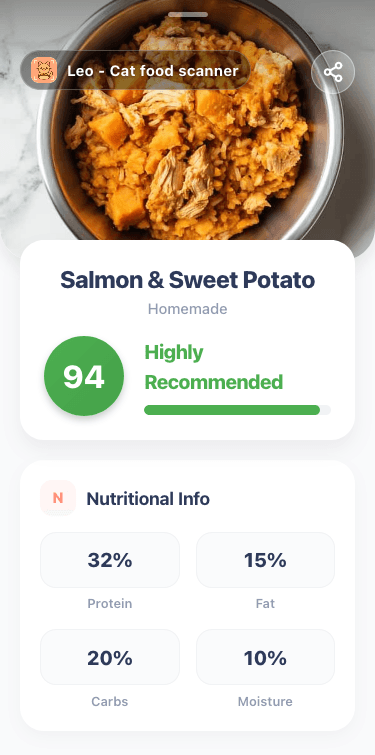
Here’s what this simple salmon & sweet potato recipe looked like once scanned inside the app:
Prep Time
10 minutes
Cook Time
20 minutes
Ingredients
You’ll need:
1 small salmon fillet (boneless)
1 tablespoon mashed sweet potato
1 tablespoon water
Optional: a very small amount of cooked egg occasionally
Instructions
Cook the salmon thoroughly without seasoning, butter, oils, garlic, or onions.
Carefully check for and remove all bones.
Mash the salmon into small flakes once cooled.
Mix the salmon with the mashed sweet potato and water until the texture softens slightly.
Allow the food to reach room temperature before serving small portions to your cat.
Store leftovers in the refrigerator for up to 2 to 3 days.
That’s it.
Simple usually works best here.
Important Notes
Salmon should always be cooked thoroughly and completely deboned before feeding.
This recipe is usually best used occasionally or alongside a balanced commercial diet unless professionally formulated long-term.
Always avoid adding salt, sauces, seasoning, garlic, or onions, since many common human ingredients can be toxic to cats.
Final Thoughts
Salmon-based homemade recipes are popular because they’re simple, high in animal protein, and usually extremely appealing to cats.
They’re not automatically superior to every commercial cat food, but some owners enjoy using them occasionally for variety or ingredient simplicity.
And honestly, once you start paying attention to ingredients, you realize how difficult it becomes to compare commercial cat foods, homemade recipes, and common additives side by side.
That’s partly why I ended up building an app to scan and analyze ingredients more easily for cat owners.
You can use it to scan:
cat food ingredients
additives
toxic plants
household hazards
and other common pet products