
Why Is There Montmorillonite Clay in Cat Food? We Looked Into It
Montmorillonite clay is found in several popular cat foods, but why is it there and is it safe for cats? We looked at how it’s used, the claims brands make about toxin binding and gut health, and what the evidence actually shows.
Why Is There Montmorillonite Clay in Cat Food? We Looked Into It
The first question that comes to mind when we see montmorillonite clay in our cat food is: “Why is it in there?”
I found it in a lot of cat food brands after scanning a lot of them. Some of these brands make surprisingly big claims to justify its presence. They describe it as an anti-caking ingredient, a mineral source, a toxin binder, and even something that may support digestion.
My goal here is to separate what the ingredient actually does from what the marketing says it does.
I Found Montmorillonite Clay in Real Cat Foods
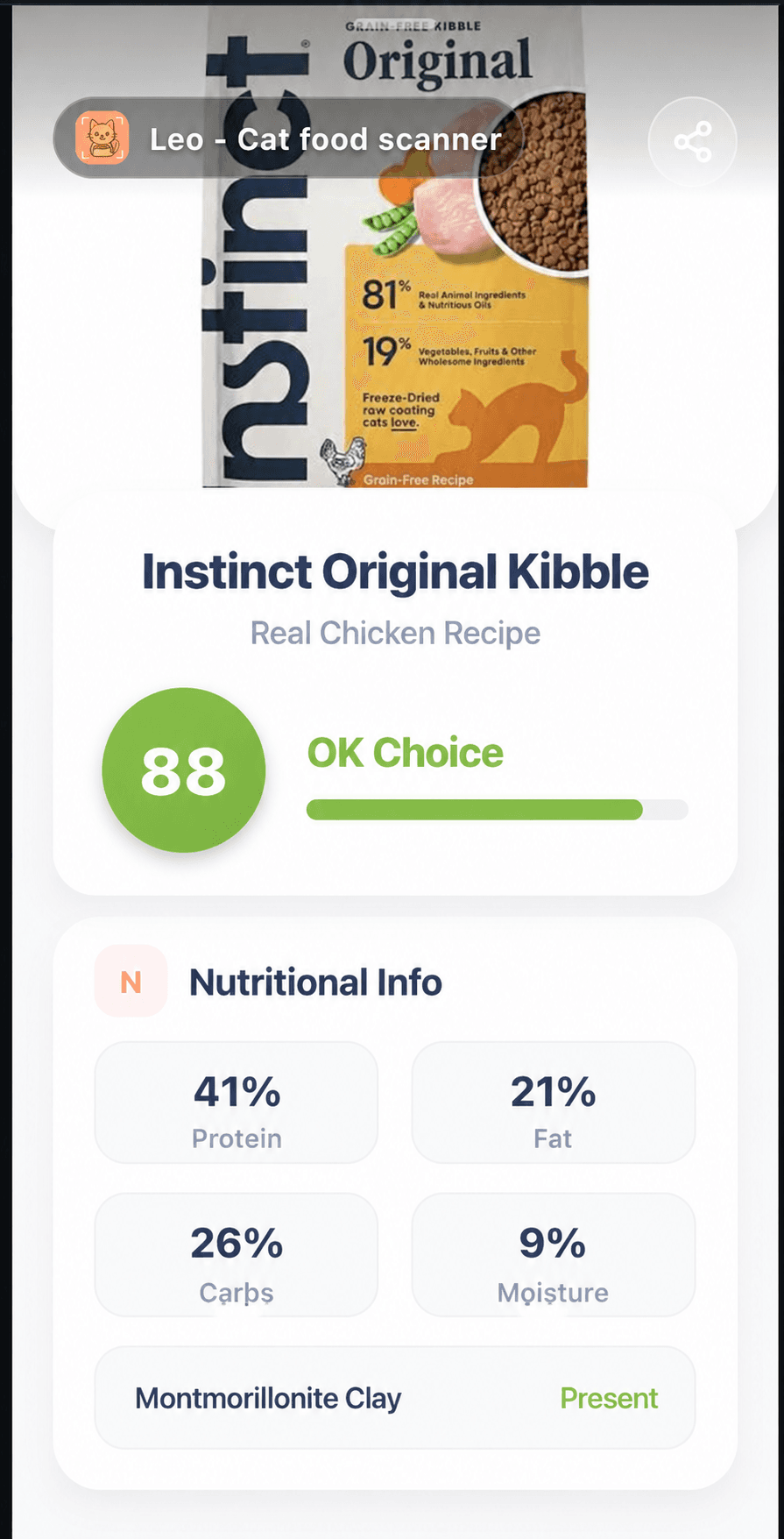
Here are a few examples: Instinct Original Kibble Real Chicken Recipe.
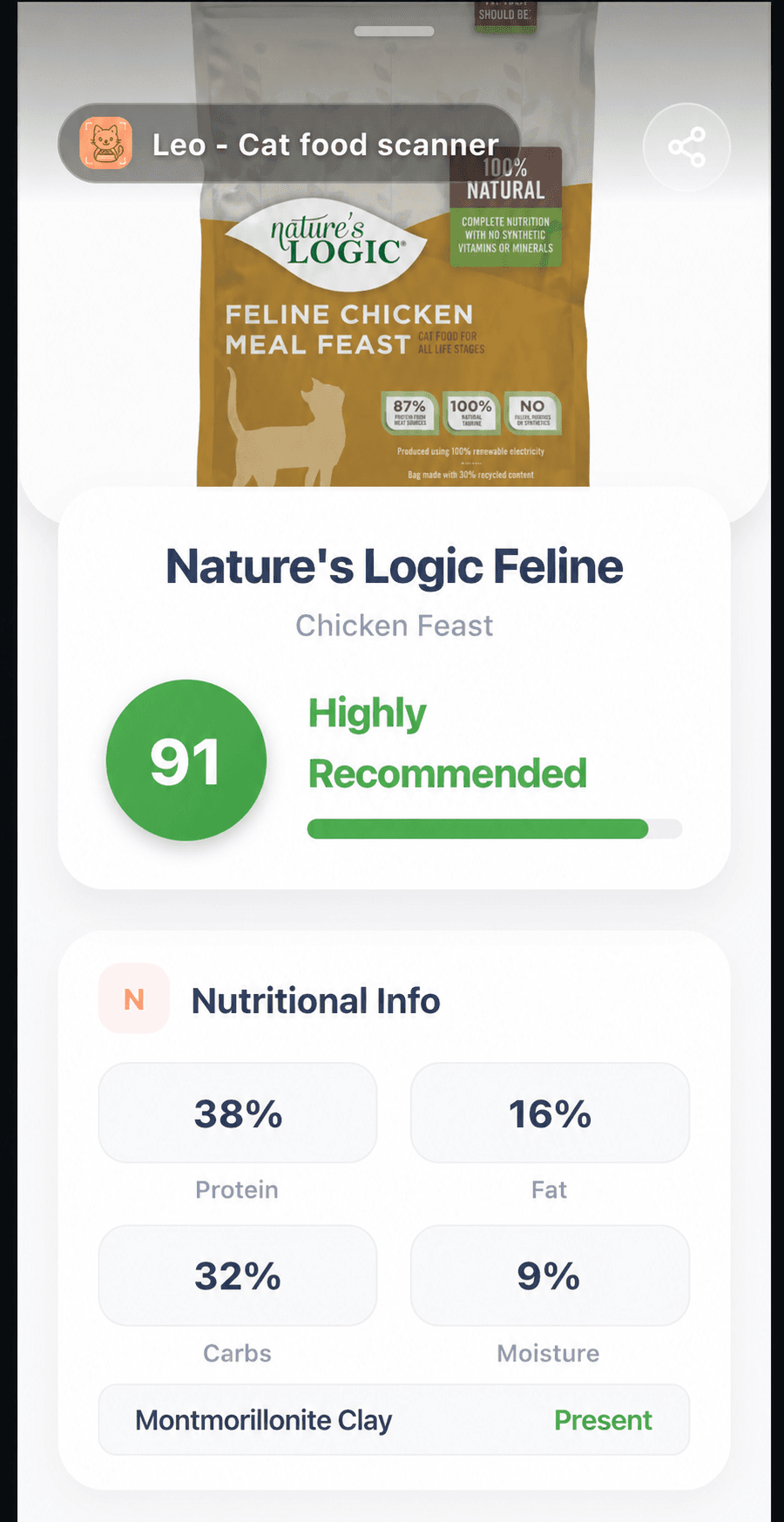
Nature's Logic Feline Chicken Feast:
Just in case you're wondering after spotting the word "clay" on your cat's ingredient list and assumed something had gone wrong at the factory, that's not what's happening here.
It is added intentionally. Which brings us to the obvious question:
So Why Is There Clay in Cat Food?
Montmorillonite is basically a type of natural clay. In pet food, clays like this are mostly used as binders and anti-caking agents. To make it simple, they help control moisture and prevent the food from clumping together. European feed regulators have also evaluated bentonite-type clays for these uses.
Well now we learned that Montmorillonite clay can be added because its physical properties are useful when making the food.
The Claims Brands Make
Depending on where you look, montmorillonite is described as providing dozens of trace minerals, binding toxins and even supporting digestion or gut health. Nature's Logic makes several of these claims, while Wysong emphasizes the trace-mineral content of the clay it uses.
Toxin binding: this one isn’t completely marketing. EFSA has evaluated bentonite specifically for reducing the absorption of aflatoxin B1 in contaminated animal feed, so the binding effect is real in that specific situation.
But that is very different from saying that clay “detoxes your cat.” Being able to bind one specific toxin in contaminated feed doesn’t mean it has some broad detox effect in a healthy cat.
Gut health: a 2020 study by Liu et al. looked at weaned piglets fed a diet containing 0.2% montmorillonite. The researchers found changes in the intestinal barrier and gut microbiota.
That's interesting, but these were studies in pigs, not cats.
So this doesn't prove that the montmorillonite found in regular commercial cat food improves your cat's digestion or gut health. When looking specifically for evidence in cats, we couldn't find comparable controlled studies showing those broader benefits.
Is Montmorillonite Clay Safe for Cats?
Now, this is probably the question that matters most when you find the ingredient on a label.
Based on what we found, montmorillonite clay does not appear to be dangerous when used at normal levels in cat food.
EFSA has also evaluated similar bentonite clays used in animal feed and found them safe at levels up to 20,000 mg/kg of complete feed under the conditions they tested.
The main thing to keep in mind is that montmorillonite is a natural mined clay, so its composition and quality can vary depending on the source.
So I wouldn't avoid a cat food just because it contains montmorillonite. The ingredient itself isn't a major red flag, but the quality and sourcing still matter.
Would We Avoid a Cat Food Because It Contains It?
And this is where looking at actual foods becomes much more useful than looking at montmorillonite alone.
Instinct Original Chicken and Nature's Logic Feline Chicken both contain it. But look beyond that one shared ingredient and you're dealing with two very different formulas, with different ingredient lists and nutritional profiles.
That's why we wouldn't judge either product simply by asking whether it contains clay.
We'd rather ask:
What are the main ingredients?
What are the protein sources?
What other additives are used?
What does the nutritional profile look like?
And how does the complete formula compare with other foods?
That's also the idea behind Cat Food Scanner Leo. Scan a cat food and Leo breaks down the full formula, so you can see what actually deserves your attention instead of trying to judge an entire product from one unfamiliar ingredient.
Sources
EFSA FEEDAP Panel (2017). Safety and efficacy of bentonite as a feed additive for all animal species. EFSA Journal, 15(12), 5096.
EFSA FEEDAP Panel (2011). Scientific Opinion on the efficacy of Bentonite (dioctahedral montmorillonite) for all species. EFSA Journal, 9(6), 2276.
Elmore, S. E. et al. (2014). Common African cooking processes do not affect the aflatoxin binding efficacy of refined calcium montmorillonite clay. Food Control, 37, 27–32.
Liu, H. et al. (2020). Dietary Montmorillonite Improves the Intestinal Mucosal Barrier and Optimizes the Intestinal Microbial Community of Weaned Piglets. Frontiers in Microbiology, 11, 593056.
Li, X. et al. (2021). Dietary copper/zinc-loaded montmorillonite improved growth performance and intestinal barrier and changed gut microbiota in weaned piglets. Journal of Animal Physiology and Animal Nutrition, 105, 678–686.
Instinct Pet Food. Original Kibble Real Chicken Recipe. Official product page.
Nature's Logic. Feline Can: Chicken Wet Cat Food and Dog & Cat Food Ingredients List.