
Friskies Cat Food Review — What The Ingredients Actually Look Like
Is Friskies actually bad for cats? We scanned the ingredients behind the colorful packaging to see what’s really inside the dry food, wet food, and treats.
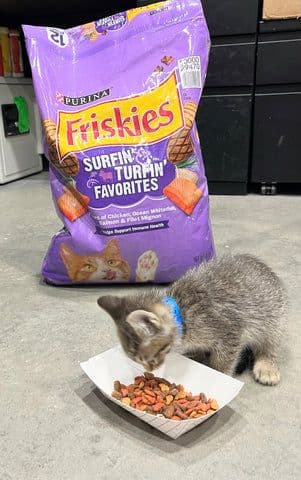
Friskies Cat Food Review — What The Ingredients Actually Look Like
Friskies is one of those cat food brands almost every cat owner has bought at least once.
It’s cheap, everywhere, aggressively colorful, and somehow every cat on earth seems ready to commit crimes for it.
And to be fair, Friskies clearly knows how to make food cats actually want to eat.
The problem starts when you stop looking at the front of the bag and start reading the ingredient list instead.
After spending way too much time comparing labels, Reddit debates, and contradictory advice online, I ended up building an app to scan and analyze cat foods more easily.
And once I started scanning Friskies formulas, a few patterns showed up very quickly:
cheap fillers, vague meat ingredients, artificial colors, and heavily processed formulas doing a lot of heavy lifting with flavorings and texture additives.
That doesn’t automatically make every Friskies product “dangerous.”
But it does explain why the brand keeps showing up in conversations about lower-quality cat food ingredients.
Friskies Dry Food
What The Marketing Says
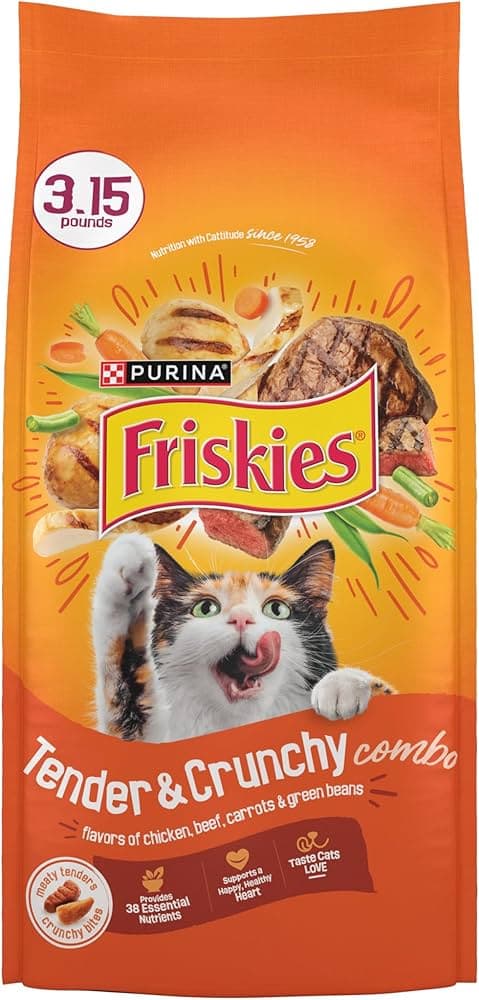
Like always, Friskies’ marketing is extremely good.
Bright colorful packaging, giant chunks of meat everywhere, fresh vegetables on the bag, and very happy-looking cats acting like they just got served a five-star restaurant meal.
At first glance, it genuinely makes it look like your cat is about to sit down to a steakhouse buffet.
Then you flip the bag over and realize the main ingredients are ground yellow corn, corn protein meal, and ground wheat.
Funny how our steakhouse buffet suddenly turned into a cereal buffet the second we looked past the packaging.
What The Ingredients Actually Look Like
Ground yellow corn
Corn protein meal
Chicken by-product meal
Ground wheat
Natural flavor
Menadione sodium bisulfite complex (Vitamin K)
Yellow 6
Red 40
Yellow 5
Blue 2
Once I scanned the ingredients, the overall pattern became obvious very quickly:
this formula relies heavily on corn, wheat, soy, and plant-based fillers rather than large amounts of clearly identified animal protein.
The first ingredients were:
- ground yellow corn
- corn protein meal
- ground wheat
- soybean meal
Which is… interesting for a food marketed with giant chunks of grilled meat all over the packaging.
And corn protein meal is another funny one here.
Because technically it helps boost the protein percentage on the label, but it’s still plant protein, not the kind of highly bioavailable animal protein cats are biologically designed to thrive on.
Then we get chicken by-product meal.
To be fair, by-products are still a source of protein. But the issue is that “by-product meal” can refer to a huge mix of leftover animal parts with very inconsistent quality depending on sourcing and processing.
And somehow, despite all the steakhouse marketing on the front of the bag, most of the early ingredients still revolve around corn, wheat, and soy.
Natural flavor also showed up in the scans, which sounds reassuring until you realize it basically tells you nothing about what’s actually being used.
And of course, artificial colors like Red 40, Yellow 5, and Blue 2 also made an appearance.
Which is always a little funny because your cat could not care less whether their kibble looks like rainbow cereal or not.
Friskies Wet Food
What The Marketing Says
Well… at this point you probably get the idea:
Friskies’ marketing is very good.
(I mean, what else would you expect from Nestlé? They have one of the biggest marketing budgets in the entire pet food industry.)
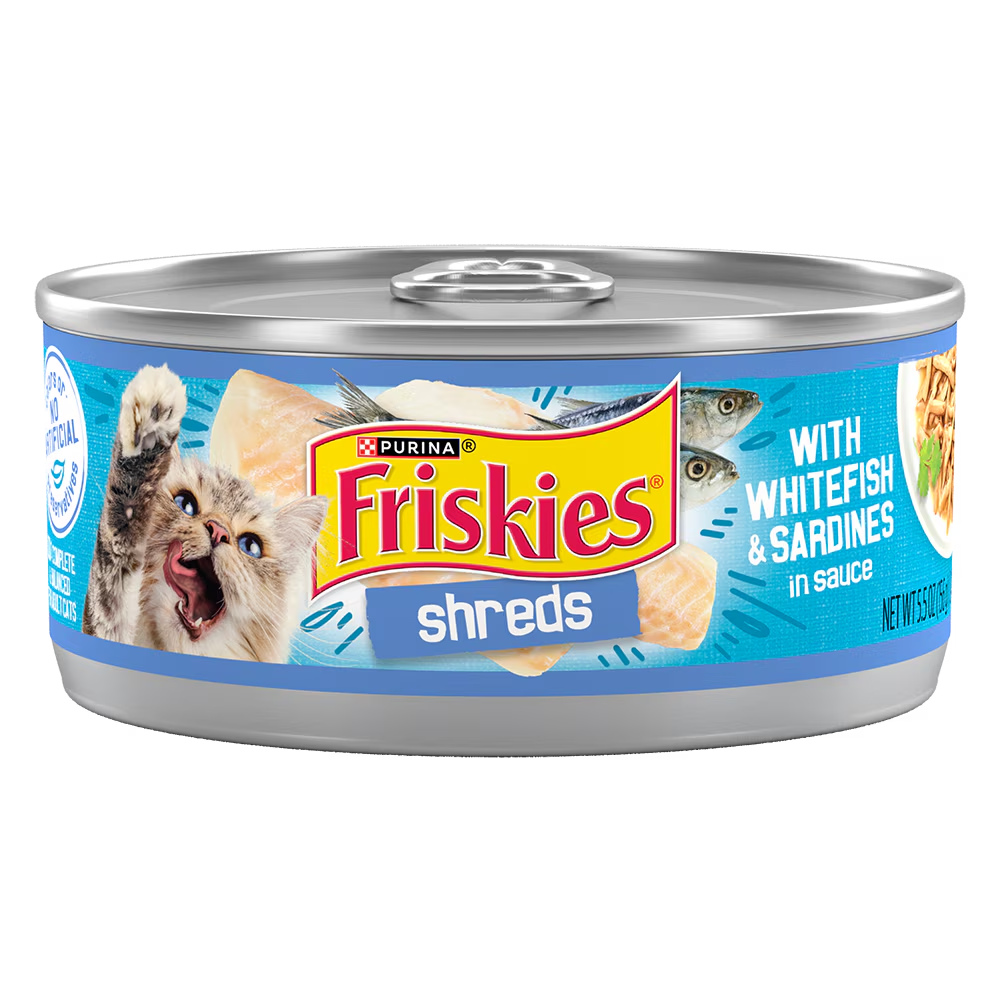
Like most Friskies products, the wet food leans heavily into seafood visuals, gravy textures, and “real fish” marketing on the front of the can.
At first glance, it definitely looks much more seafood-heavy and protein-rich than what the full ingredient list actually suggests.
What The Ingredients Actually Look Like
Meat by-products
Turkey
Wheat gluten
Chicken
Modified corn starch
Soy flour
Ocean whitefish
Sardines
Artificial and natural flavors
Taurine
Once I scanned the wet food ingredients, the formula looked a bit less corn-heavy than the dry food, but a lot of the same patterns still showed up.
The app flagged ingredients like:
- meat by-products
- wheat gluten
- soy flour
- modified corn starch
- artificial and natural flavors
So once again, our beautiful seafood buffet slowly started turning back into a filler buffet the second we looked past the front label.
Which is interesting for a product marketed almost entirely around whitefish and sardines on the front of the can.
And to be fair, actual fish ingredients were present in the formula.
The problem is that they’re still sharing space with plant proteins, fillers, starches, and vague flavor additives helping bulk out the recipe behind the scenes.
“Artificial and natural flavors” also made another appearance here, which is basically pet food’s favorite way of saying:
“trust us bro.”
One genuinely positive thing though:
the scans did flag taurine, which is an essential amino acid cats actually need for heart and eye health.
Friskies Treats
What The Marketing Says
Do I even need to say again how good Friskies’ marketing is at this point?
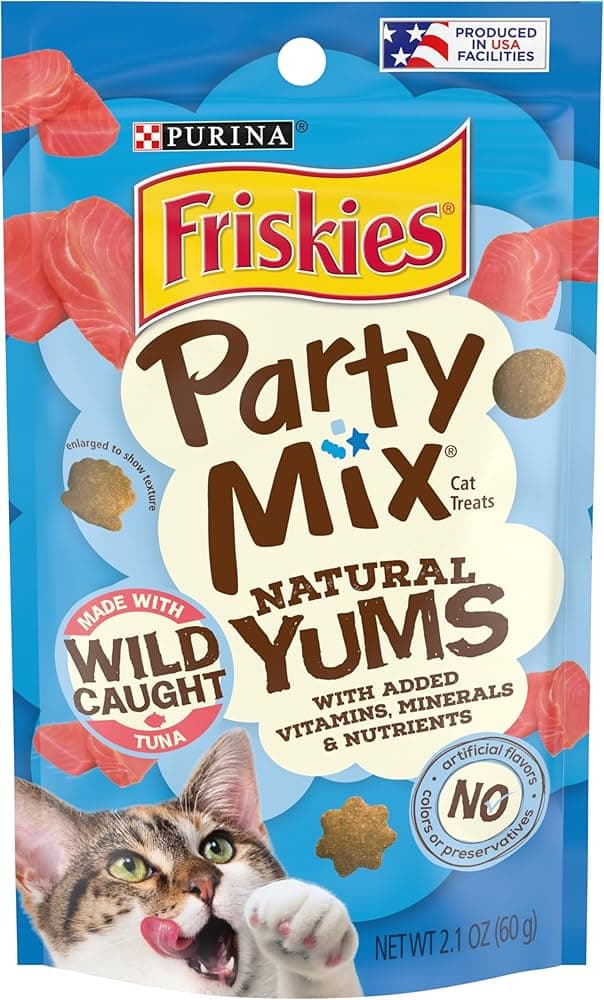
Because honestly, this packaging makes the treats look like your cat is about to get served wild-caught tuna snacks prepared by a tiny seafood restaurant chef.
What The Ingredients Actually Look Like
Compared to the dry food and wet food, the treats actually started off surprisingly decent on paper.
The first ingredients included tuna and chicken meal, which already sounded a lot closer to what you’d expect from an actual cat treat instead of another disguised cereal snack.
But then Friskies slowly returned to its natural habitat:
brewers rice, wheat flour, corn gluten meal, pea starch, barley, and chicken by-product meal all started showing up throughout the formula.
So our “Natural Yums” wild-caught tuna treats quietly turned into another carbohydrate-heavy mix with a few fish ingredients sprinkled in for decoration.
The app also flagged “natural flavor” again, which continues to be one of the vaguest ingredients in pet food labels.
And then there was menadione sodium bisulfite complex (Vitamin K3), a synthetic form of vitamin K that has been debated in pet nutrition discussions for years regarding long-term safety concerns.
To be fair though, the formula wasn’t entirely bad.
The scans also picked up taurine and animal-based fats, which are at least more species-appropriate for cats than half the filler ingredients surrounding them.
Why Cats Love It Anyway
At this point, it becomes easier to understand why so many people search things like:
“is Friskies bad for cats?”
“Okay… if Friskies is *that* questionable, why does my cat absolutely lose its mind every time I open a bag or can?”
And honestly, that’s a fair question.
Because the reality is:
cat food companies are extremely good at making foods hyper-palatable.
Between the added fats, flavor coatings, texture enhancers, gravy, strong smells, and flavor additives, these foods are literally designed to trigger a strong reaction from cats.
That doesn’t automatically mean the food is “poison” or that every cat eating Friskies will instantly become unhealthy.
A lot of cats eat it for years without obvious issues.
The problem is more about ingredient quality and nutritional optimization over the long term.
It’s a bit like fast food for humans:
something can taste amazing while still not being the ideal thing to eat every single day.
And to be fair, cats also don’t read ingredient labels.
If they did, I’m not entirely sure “ground yellow corn” would be their first choice at a seafood buffet.
Final Verdict
So… is Friskies the worst cat food on the market?
Probably not.
But after scanning the dry food, wet food, and treats side by side, a pretty clear pattern kept showing up:
heavy marketing, vague ingredients, plant fillers, flavor additives, and lower-cost ingredients doing a lot of the heavy lifting behind the scenes.
To be fair, some formulas were definitely better than others.
The wet food and treats at least contained more actual animal-based ingredients compared to the dry food.
But overall, this still feels more like a product optimized for mass-market affordability and palatability than genuinely high-quality feline nutrition.
If your cat currently eats Friskies, this also doesn’t mean you need to panic and throw everything away immediately.
The goal is simply to understand what’s actually inside the food and make more informed decisions over time.
If you want to compare Friskies with other brands or scan the ingredients of your own cat food, you can try the app below.
It breaks down:
- ingredient quality
- fillers
- controversial additives
- protein sources
- and overall nutritional red flags
Sometimes the front packaging tells a very different story from the ingredient list hiding behind it.